

Showing posts with label ICE Training Company. Show all posts
Showing posts with label ICE Training Company. Show all posts
Sunday, June 16, 2019
Armed Home Defense Tactics 6.13.19
Attended my annual Personal Defense Network your class at Rob Pincus came through Iowa. This year was all about home defense. Some old information and some new information. Thoroughly enjoyable class. I have some things to work on.


Wednesday, December 6, 2017
2017 Training Schedule
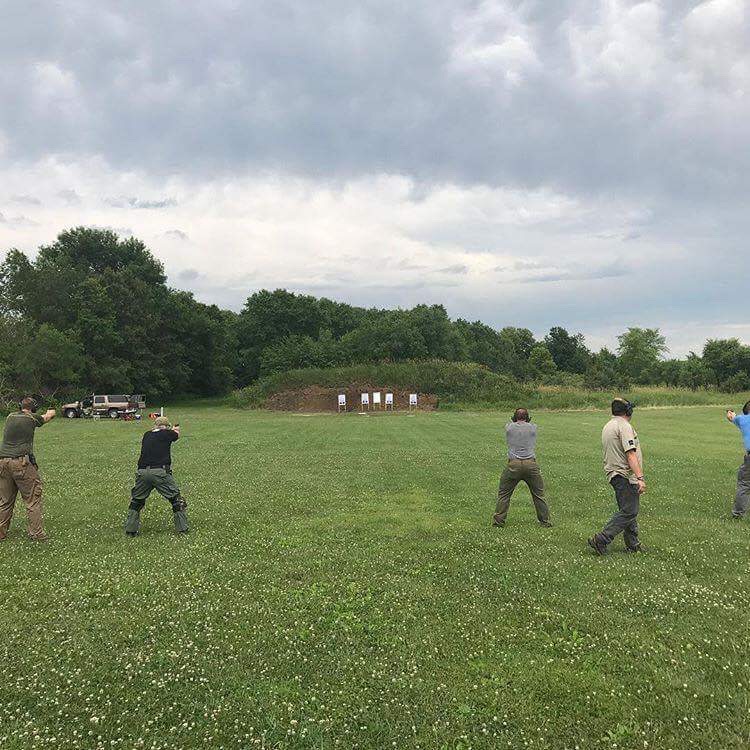


As I was doing my review for the knife training I just attended I started reviewing my training for the last year. For not really concentrating on my own training I had a pretty successful year. I attended both personal and professional development classes. These are all interspersed around the large number of defensive handgun, defensive rifle, medical/emergency medicine, and active shooter response classes I instruct myself. If you count teaching as learning, which I do, then I really learned a lot this year. Below is the training I personally took this past year. Covers a wide variety of skills.
2/4 Cedar County EMS Fest
Tipton, Iowa Various presenters
2/18 Landing the Plane
Marion, Iowa Michael J Anderson
3/4 Iowa County EMS Day
Williamsburg, Iowa Various presenters
3/11 Code 1 EMS Conference
Cedar Rapids, Iowa Various presenters
4/29 EMS Instructor Development Conference
Des Moines, Iowa Various presenters
5/1-10 Critical Care Paramedic Course
University of Iowa EMSLRC Iowa City, Iowa
Various presenters
6/9-11 Extreme Close Quarters Concepts
Faribault, Minnesota, Shivworks Craig Douglas
6/19 Armed Defense Around Vehicles
Central City, Iowa, I.C.E Training Company Rob Pincus
6/22 Advanced Pistol Handling
Central City, Iowa, I.C.E. Training Company Jamie Onion
6/24-25 Citizens Rules of Engagement
Central City, Iowa, Mas Ayoob Group Mas Ayoob
7/29-30 Advanced Law Enforcement Rapid Response Training (ALERRT)
Independence, Iowa, ALERRT Cadre/Independence PD
9/22-25 Combat Focus Shooting Instructor Conference
Faribault, Minnesota I.C.E Training Company CFS Leadership and Cadre
11/4 Iowa Law Enforcement Academy Patrol Rifle Operator Course
Vinton,Iowa ILEA Instructor/Vinton PD
12/2-3 Practical Small Knife Skills 1 and 2
Jordan,Minnesota MDTS Chris Fry
If you say you don't have time to train you are wrong. #onepercentbetter #relentlessforwardprogress
Tuesday, September 6, 2016
Sunday, April 10, 2016
CVO Gun Talk Episode 001
Our first episode. 3 guys talk guns and training. Download here http://www.tpspproductions.com/cvo-gun-talk-1/ or subscribe on itunes
Sunday, November 22, 2015
CFSID
"Education is missing from firearms training." And so it began. It has taken me about a month to digest the experience that was the Combat Focus Shooting Instructor Development Course. I first discovered Combat Focus Shooting through some DVD's I got from the NRA. As I watched them over an over, through days and months, I slowly developed a goal. I was going to learn how to teach this program. A defensive firearms program that wasn't based on perfect scenarios or the myth of hyper awareness. This program was based on psychology,physiology,reason, logic and empirical evidence.
Initially I took every class I could that I.C.E Training Company offered. Fundamentals of Combat Focus Shooting,Combat Focus Shooting, Fundamentals Of Advanced Pistol Handling, Combat Focus Carbine and the Defensive Firearms Coaches Course. I always had my eye on the end goal of becoming a certified Combat Focus Shooting Instructor. Eventually the opportunity came my way at the Rice County MN Law Enforcement Center. This is where Omari Broussard Chief Operating Officer of I.C.E. Training Company would be conducting a Combat Focus Shooting Instructor Development Course. So I took some vacation and drove up to Minnesota with my friend Ernie who would also be attending the 5 day CFSID.
 Day 1-
Started off with an Introduction to CFS. We talked about goals, How efficiency could be measured with time,effort and energy. We discussed how things should be observable,measurable and repeatable. The evolution of CFS and how to train in context. Concepts vs details, effectiveness vs efficiency, consistency. We talked about the plausibility principle and adult learning models. Training attitudes were defined, the skill development cycle was discussed. We talked about safety,comfort and competency in depth, professionalism and instructor attributes. After that first day we went back to the hotel with some homework and a full noggin. Realizing that everything was testable the studying commenced straight away.

Day 2-
Was another day heavy on concept and theory. We talked extensively about the body's natural reactions. We discussed the physiology of the body. My paramedic background really helped me out in this area. It was on this day we also started to move from the theoretical to the practical. We covered combat accuracy and combat efficiency. The balance of speed and precision was introduced as a key concept. We spent a good part of the day on the range running each other through the high compressed ready, trigger control, stance, grip , extend,touch,press, presentation from the holster, single shot up and multiple shot up drills. Day 2 ended with more homework and teach back assignments for day 3.

Day3-
After we all completed our teach backs it was back on the range. Balance of speed and precision,lateral movement,multi target engagement, critical incident reload, figure 8 drill, take a lap drill,dynamic deviation control,cognitive drill concept, and non diagnostic linear malfunctions were all covered in depth. We learned, discussed and then taught these drills to each other. Day 3 ended with more teach back assignments for day 4.
 Day 4-
More teach backs, then to the range. Review of take a lap drill and presentation from the holster. Then we covered the spin drill, the wind sprint drill, shooting in motion, volume of fire and the chart of doom. At the end of the day we went back to the classroom for a 2 hour block of instruction on how to market your firearms training business. Then back to the hotel to study some more. Day 5 was test day.

Day5-
Test day. We started the day with the written test. This was a fill in the blank test going over everything we had learned in the previous 4 days. A score of 90% was required to successfully pass. I honestly forget how many questions there were but I think it was around 50. Then Omari, our lead instructor, handed out random note cards. On these cards were a concept or a drill we would be required to teach to the group and be graded on. Each of us got 4, usually 2 concepts and 2 drills. In addition each of us would have to teach/demonstrate a critical incident reload. These graded evolutions took up the rest of that day, as we took turns teaching and being students. All under the watchful eye of our primary instructor. Then it was done. We wouldn't know if we passed until all the tests were graded and the subjective teaching tests were examined. Ernie and I had some great conversation full of ideas and plans on the way back to Iowa.

I found out I became "certified" meaning I had passed the course a few days later. Currently I m working on becoming "active". This step involves co-teaching a CFS course with a senior CFS instructor. As there are only 5 designated senior instructors nationwide this will require some coordination. One thing I like and has drawn me to CFS and I.C.E Training is that they hold the standard. Less than 50% of those that attempt CFSID ever become active. I.C.E. Training doesn't care. The standard is the standard although they do allow people to retest for free if necessary after a cool off period. I have been deliberately vague about a lot of the course. If you want more indepth information you can pay for it and strap on your thinking hat like I had to. I would definitely recommend you become a I.C.E Defensive Firearms Coach before attempting CFSID, it helped me a lot. I am very excited to grow my firearms training business. Check me out at www.eighteenzulu.com or @eighteenzulu on Twitter and Facebook.
Initially I took every class I could that I.C.E Training Company offered. Fundamentals of Combat Focus Shooting,Combat Focus Shooting, Fundamentals Of Advanced Pistol Handling, Combat Focus Carbine and the Defensive Firearms Coaches Course. I always had my eye on the end goal of becoming a certified Combat Focus Shooting Instructor. Eventually the opportunity came my way at the Rice County MN Law Enforcement Center. This is where Omari Broussard Chief Operating Officer of I.C.E. Training Company would be conducting a Combat Focus Shooting Instructor Development Course. So I took some vacation and drove up to Minnesota with my friend Ernie who would also be attending the 5 day CFSID.

Started off with an Introduction to CFS. We talked about goals, How efficiency could be measured with time,effort and energy. We discussed how things should be observable,measurable and repeatable. The evolution of CFS and how to train in context. Concepts vs details, effectiveness vs efficiency, consistency. We talked about the plausibility principle and adult learning models. Training attitudes were defined, the skill development cycle was discussed. We talked about safety,comfort and competency in depth, professionalism and instructor attributes. After that first day we went back to the hotel with some homework and a full noggin. Realizing that everything was testable the studying commenced straight away.

Day 2-
Was another day heavy on concept and theory. We talked extensively about the body's natural reactions. We discussed the physiology of the body. My paramedic background really helped me out in this area. It was on this day we also started to move from the theoretical to the practical. We covered combat accuracy and combat efficiency. The balance of speed and precision was introduced as a key concept. We spent a good part of the day on the range running each other through the high compressed ready, trigger control, stance, grip , extend,touch,press, presentation from the holster, single shot up and multiple shot up drills. Day 2 ended with more homework and teach back assignments for day 3.

Day3-
After we all completed our teach backs it was back on the range. Balance of speed and precision,lateral movement,multi target engagement, critical incident reload, figure 8 drill, take a lap drill,dynamic deviation control,cognitive drill concept, and non diagnostic linear malfunctions were all covered in depth. We learned, discussed and then taught these drills to each other. Day 3 ended with more teach back assignments for day 4.

More teach backs, then to the range. Review of take a lap drill and presentation from the holster. Then we covered the spin drill, the wind sprint drill, shooting in motion, volume of fire and the chart of doom. At the end of the day we went back to the classroom for a 2 hour block of instruction on how to market your firearms training business. Then back to the hotel to study some more. Day 5 was test day.

Day5-
Test day. We started the day with the written test. This was a fill in the blank test going over everything we had learned in the previous 4 days. A score of 90% was required to successfully pass. I honestly forget how many questions there were but I think it was around 50. Then Omari, our lead instructor, handed out random note cards. On these cards were a concept or a drill we would be required to teach to the group and be graded on. Each of us got 4, usually 2 concepts and 2 drills. In addition each of us would have to teach/demonstrate a critical incident reload. These graded evolutions took up the rest of that day, as we took turns teaching and being students. All under the watchful eye of our primary instructor. Then it was done. We wouldn't know if we passed until all the tests were graded and the subjective teaching tests were examined. Ernie and I had some great conversation full of ideas and plans on the way back to Iowa.

I found out I became "certified" meaning I had passed the course a few days later. Currently I m working on becoming "active". This step involves co-teaching a CFS course with a senior CFS instructor. As there are only 5 designated senior instructors nationwide this will require some coordination. One thing I like and has drawn me to CFS and I.C.E Training is that they hold the standard. Less than 50% of those that attempt CFSID ever become active. I.C.E. Training doesn't care. The standard is the standard although they do allow people to retest for free if necessary after a cool off period. I have been deliberately vague about a lot of the course. If you want more indepth information you can pay for it and strap on your thinking hat like I had to. I would definitely recommend you become a I.C.E Defensive Firearms Coach before attempting CFSID, it helped me a lot. I am very excited to grow my firearms training business. Check me out at www.eighteenzulu.com or @eighteenzulu on Twitter and Facebook.
Thursday, September 17, 2015
Fundamentals of Advanced Pistol Handling

Over the past year I have attended many of the I.C.E Training Company's courses. The one I was missing however was Advanced Pistol Handling. When I found out the one day version, Fundamentals of Advanced Pistol Handling, was being offered locally and being taught by the same two instructors who had taught my Defensive Firearms Coaches class I registered right away. The two instructors Jamie Onion and Mike Anderson really work well together and I appreciate the dynamic they bring to the instruction ( excuse me while I wipe the brown shit off my nose).
APH started like most I.C.E Company courses with the three safety rules and range brief. The responsibilities of Safety,Comfort and Competency was reiterated but since a prerequisite for APH was to have successfully completed Combat Focus Shooting these points were not belabored. The focus was on getting us on the range.
We started off with the standard Extend, Touch, Press drill so the instructors could evaluate our abilities and correct any deficiencies early in the learning cycle. We quickly moved through the startle response, incorporating lateral movement,presentation from the holster, the Balance of Speed and Precision and the Critical Incident Reload. All of these things were familiar to me. After about 90 minutes we started getting into unfamiliar or at least rusty territory.
We started working from different unorthodox positions. We conducted B of SP drills from kneeling,sitting and laying supine with our feet towards the target. Eventually we incorporated "flow drills". I was familiar with these from the Combat Focus Carbine class I had attended. Essentially we did some tactical yoga by continuously moving between the standing,kneeling and sitting positions. When the "up" command was given you had to process the information and if you were between positions you had to go back to the previous position or move forward to the next. This drill was fun but it did remind me I am getting older and I am not as flexible as I should be. While not all that strenuous for me it did provide some challenges for other students as well. I think this drill highlights the need for physical training being incorporated into self defense training. It isn't all about the tool if you can't catch your breath to employ it.


After a lunch break we moved onto strong hand and weak hand shooting and one handed reloads. It was during this evolution I was thrust into the spotlight in almost the exact same way I was when I went through CFS with Rob Pincus. We were shooting the Balance of Speed and Precision weak hand only. During the Balance of Speed and Precision the "up" command stimulates the shooter to place 3-5 rounds in the combat effective area of the target as fast as they can accurately. If a number is called the shooter needs to place one well aimed shot into the 3 inch circle that corresponds to that number. Sometimes I get inside my own head and such was the case during this drill. Although I had been hitting my numbers fairly consistently all day when Mike called out the number 2 I missed weak hand only. I must not have been the only one because he told everyone that had hit the number to step back. He then gave the command again and I missed again. And so it went the same exact thing had happened to me in front of Rob with the exact same number back at CFS. Eventually I was the only one left that hadn't hit the number. As I stood there, alone on the firing line, Jamie came up beside me and asked which eye I was using to aim and some other questions. He then told me to fire and I missed again. Now these guys know my background and I imagine they expect a certain amount of proficiency from me. I certainly do, but I am "weak" with the weak hand. Jamie examined my sights trying to give me any excuse for my suckedness but as I missed for the 5th or 6th time he just stated "Nope its you." So we moved on with my ego a little smaller. But that is good training and I know what to work on.
We then moved on to Non Diagnostic Linear Mulfunction Drills. In a nutshell we would be resolving malfunctions without observing the issue and following a linear protocol. I am not going to repeat the protocol because you can pay to learn it like I did but here is some photographic evidence.

We induced malfunctions by having another student randomly load an empty case somewhere in our 3 magazines. One for each magazine, somewhere other than the first or last round. Whe then conducted a B of SP drill both strong hand and weak hand only resolving malfunctions and the need to reload as it presented itself. The challenge for me was being able to recognize if the inability to fire was due to a malfunction or because of slide lock. This drill certainly tested all your cognitive abilities. It was while shooting weak handed again that I had another spotlight moment. I experienced a malfunction and followed the protocol but I could not clear it. I continued down the path but it would not clear. Once Jamie noticed my issue he had me try a few other techniques to try and drop the magazine even going so far as to depress the magazine release with my left middle finger and try to extract the magazine with my teeth. No Go. Finally he took my Glock from me and this is what we saw.

The empty casing had failed to extract during my efforts and racking the slide had stripped another round from the magazine with nowhere to go as the chamber was full of brass. My repeated attempts to extract the casing had jammed the follow on bullet back into the casing so far it split the casing and jammed it behind the magazine release. There was no way it was coming out one handed. At that point I had a very expensive brick. Another lesson learned, shit happens, have a back up plan. Jamie was able to clear it with two hands and once again we moved on.
The culmination of the course was shooting from a vehicle both weakside and strong side. We started out from chairs working on drawing and presenting the weapon without flagging our own bodies. Eventually we individually shot from the drivers seat of Mike's SUV both out the drivers window and the passenger window. Surprisingly the hardest part was getting the seatbelt off and not extending the gun outside of the window. I successfully completed the evolution but in the days since I have found myself practicing unbuckling my seatbelt and visualizing drawing my firearm trying to make it smoother.

As is the SOP after class we conducted a debrief. Every student is required to talk and I said my piece first as I had to leave for work. My two takeaways were obviously more work on weakhanded manipulation and also that no one had ever instructed me to move my strong side leg out of the way as you draw from an unorthodox position. This is so you don't flag yourself even for a small amount of time. No one had ever taught me this technique which was actually shocking to me. Maybe in the military they accept a certain amount of risk that they could have easily mitigated. I really enjoyed this course especially after a shittastic work week. I think I am ready for the CFS Instructor development Course in a month.
Sunday, June 14, 2015
Combat Focus Shooting 2015 : PDN Tour part 2

The day after Combat Focus Carbine I regrouped at the Big Springs range in Searsboro Iowa for the two day version of Combat Focus Shooting taught by Rob Pincus and a part of the Personal Defense Network national tour. I had taken the one day version of this course titled Fundamentals of Combat Focus Shooting back in April with Ken Crawford and Allesandro Padavoni. I enjoyed that course but I was looking forward to the two day version to practice some more skills but more importantly to learn from the teaching techniques of the man who developed the Combat Focus Shooting program. Although this was an end user class I was really looking at it as a bit of instructor development for my classes as a I.C.E. Defensive Firearms Coach and potential CFS instructor candidate.

As he did with the CFC course Rob spent a fair amount of time explaining the course and some of the CFS principles prior to any bullets going down range. He talked about Safety,Comfort and Competency and the three safety rules. He gave us the context of the course. CFS is a shooting program that teaches you to shoot efficiently in the context of a Dynamic Critical Incident. A Dynamic Critical Incident is defined as surprising,chaotic and it involves the presentation of a lethal threat. In the context of this class the lethal threat was more than two arms length away. CFS is also a intuitive shooting program that works well with the body,works well with the gun and works well within the context of intended use. As he had the previous day he talked about efficient vs effective and physiological vs psychological stops to an attack.
We did many drills during this two day course so I will not list them all here. Suffice to say we covered, critical incident reloads, malfunctions, the Balance of Speed and Precision,presentation from the holster, lateral movement, Multiple target engagement,weak hand only engagement, strong hand only engagement, volume of fire and many more. As previously described in the CFC post we did all this while under varying amounts of stress such as experienced during the "take a lap' and "wind sprint" drills. What I want to talk about is what I took away in regards to the "why " of CFS.

The first concept that resonated with me was the explanation of competence. Rob explained how when we learn a new skill we work through four levels of competence. First we are unconsciously incompetent because we don't even realize we need the skill. Secondly we are consciously incompetent as we learn our need for a skill and its employment. Thirdly we are consciously competent as we refine our skill yet have to think about its use. Lastly we become unconsciously competent as the skill becomes "second nature" and we don't think about its use. Rob used the analogy of moving you foot from the gas to the brake while driving. When we first learned to drive this was a conscious movement but now for most drivers it just happens. Personally I equate it to my time as a military free fall parachutist. During the MFF basic course I was often a tumble biscuit as I tried to control my body and make it do what I wanted as I struggled to maintain my stability in the relative wind. By the time I was a senior MFF instructor myself I only had to have the desire for something to happen in the air and my body made it happen much like the brake analogy.
Rob used a couple of analogies that will also help me refine my own instructional technique. He talked about the Christmas/Lottery model of shooting precision. In this model a child is opening presents at Christmas. Every present is expected to have a wonderful gift inside. As each present is opened the child's dopamine levels rise and a euphoric feeling is experienced. But inevitably some presents contain socks or tshirts from Grandma. So disappointment happens and dopamine levels drop. In the lottery model however individuals buy a lottery ticket never fully expecting to win but if they do dopamine levels rise unexpectedly. Rob wanted us to be the Christmas shooter and not the lottery shooter. Have the confidence and expect to get the hit and be disappointed if you don't. Don't send the shot down range and be happy if you get the hit by chance.
The Balance of Speed and Precision is a core concept of the Combat Focus Shooting program. It is drilled and talked about in many different scenarios. The underlying concept though is that the shooter should shoot as fast as possible while still getting the necessary hits in the intended target. They target itself defines the need for the amount of precision. Rob has developed another analogy that makes this easy to understand. Imagine a U shaped tube partially filled with a liquid. Each stem of the U has graduations from 1-10 with the 1 being at the top and the graduations moving down. On the left is speed and on the right stem is precision. Also on the right stem is a pump that can fill the tube with pressure. Based on the target increasing pressure is forced into the tube. As the need for precision increases numerically the liquid on the speed side moves towards a lower number and vice versa. It was a brilliantly simple yet effective graphical representation of the Balance of Speed and Precision concept. I have hopefully reproduced it accurately below. But you get the idea.

The last concept that Rob explained in some detail was the phenomenon of Tachypsychia and Bradypsychia or the perceived speeding up or slowing down of time during a DCI. He utilized another story and graphical representation that would lose a lot in translation here but suffice to say it involved commandos, spy satellites and terrorist bad guys. This story also made the concepts crystal clear in my mind.
All in all this course was what I had hoped it would be. I honed my own skills while learning some innovative ways to teach the I.C.E. Training Company Concepts. I am looking forward to my chance at becoming a CFS instructor in the future and teaching these concepts more thoroughly to others.

Finally I give you a video of my figure 8 drill. Shows that even an experienced shooter that has run the drill before can experience cognitive dissonance. Keep training.
Saturday, June 13, 2015
Combat Focus Carbine 2015:PDN Tour part 1

Recently I traveled to Searsboro Iowa to participate in a few courses offered by Rob Pincus and his I.C.E. Training Company. The first class I participated in was the one day version of the Combat Focus Carbine course. The context of the course would be a home defense scenario where the need to shoot was established. I brought two different rifles to this class, because one is none and two is one as the saying goes. My first was my Stag Arms Model 2. This is just a plain Jane AR-15 platform that I bought right after the Sandy Hook "they are coming for our guns" scare. This would be my back up choice.

My primary weapon was an AR-15 I had recently built. This AR had a Palmetto State Armory cold forged barrel and upper receiver with a Palmetto State Armory nickel boron BCG and bolt. The lower parts kit and stock were from Brownells. The trigger assembly was a Rock River 2 stage trigger and it was in an Anderson manufacturing lower receiver. The optic was a Strike Fire Vortex with back up Magpul sights. I had shot only about 100 rounds out of this weapon prior to the class.

Rob spent about an hour at the beginning talking about concepts that were familiar to me as an I.C.E Defensive Firearms Coach. I talked about that experience here -http://www.mikemac356.blogspot.com/2015/03/defensive-firearms-coaches-course.html . He first talked about Safety,Comfort and Competency. How safety was his responsibility as the instructor. He talked about how comfort was a shared responsibility and how it was up to him to make us intellectual comfortable by explaining the "why" and the reasons behind the drills we would perform today. No BS answers, more tools for our toolbox or that's they way we have always done it. The "why" would be backed up with examples and empirical data. It was up to us to be physically comfortable and to let him know if we needed any accommodations with our gear or physical limitations to attain that physical comfort. Competency was an individual and subjective trait that was the shooters responsibility. We were not competing against each other but against ourselves. Our goal would be to leave the class a better defensive carbine shooter than when we arrived. Rob talked effectiveness vs efficiency and how something could be effective without being efficient. He talked about psychological stops to an attack vs physiological stops. You actions could psychologically stop an attack by making the attacker run away but our goal was to physiologically stop it by engaging the threat in the "high center chest". Lastly before we started firing Rob went over the three safety rules.

#1. Keep your trigger finger somewhere other than the trigger
#2. Point your rifle in a generally safe direction as much as possible. ( Rob designated this direction as down range or at the ground.)
#3. Remember you are in control of a firearm any discharge whether negligent or intentional could cause serious injury or death to you or others.
This is the "big picture" rule. It encapsulates for me the I.C.E. training philosophy and why I like the companies methodology. They give you facts and research to back up what they teach. But first and foremost they expect you to act like an adult. They are not there to babysit you because firearms and the use of them for self defense is very serious business, not a game or a hobby. Once safety was established we moved to the line at about a distance of 7-10 feet. All the training would be at self defense distances within the context of the course. I don't think we shot more than 30-40 feet away from the targets at most.

Anyway I got an epiphany during the very first drill. Rob talked about body mechanics and position. He talked about how we should be able to hit what we where aiming at using our body position and not need to use the sights at self defense ranges. We conducted a raise,touch,press drill where we raised the rifle to our shoulder, touched the trigger on his command and then smoothly pressed the trigger to the rear. We were not using sights or optics. In fact my sights were down and the dust cover was closed on my optic. My first shot was high and left about 12 inches from the intended target. I thought that was weird but my second shot was in the same general area. So based on Rob's advice I brought the stock up higher on my cheek lowering my point of aim. Viola!!! I was hitting right where I needed to be. This is where the epiphany happened. I have shot hundreds of thousands of rounds out of the AR15/M16/M4 platform in my life. It is probably the weapon I am most familiar with. But I had been doing it all wrong!!! I had been taking the time to acquire the target through my sights and unconsciously adjusting my point of aim all these years. I had wasted precious seconds as I cleared rooms during my military career. Seconds that mattered. It was a lesson I will not forget.

After our body positions were squared away we moved in to "up" drills where we conducted the raise,touch press commands on our own at each command of "up!!" Single and multiple targets were engaged with 3-5 rounds. Rob talked about malfunction procedures as they presented themselves and emphasized not looking as you resolved the issue and keeping your control hand on the rifle. We then moved our optics to match our body position and briefly zeroed them to the distances we were working at. My zero had been the 25m/300m zero that I was used to from the military. I had to move my point impact about 1/4 inch left at self defense distances. We then moved on to the Balance of Speed and Precision Drill. This drill is the bread and butter of every I.C.E. training course. The concept is that the target dictates the need for precision. The shooter should go as fast as possible while still getting the needed hits. On the "up" command the shooter moves laterally and either engages the high center chest area with multiple shots or one of the 3 inch numbered circles with a single shot if a number is called out. Rob encourages each individual to push themselves. If the shots start to stray outside the boundaries of the box the shooter needs to slow down, if the shooter is shooting 1 inch groups they need to speed up. The high center chest box should be filled with bullet holes, pretty much equally throughout, and the single shots can hit anywhere in the circles.

After this drill we moved on to shooting from different positions. Sitting,kneeling,squatting. The precise position was not emphasized but getting a good solid shooting platform in each position was. For instance due to my reduced mobility (old guy issues) I had my feet in front of me in the seated position rather than shooting from a cross legged position as I was taught years ago. However the important thing was to keep elbows off of knees. Putting them either on the thigh muscle or the knees in the tricep so a muscle to bone platform was utilized and not a bone to bone connection which might be less than stable.

Once we shot from all positions we conducted flow drills. We would randomly move from position to position and at the "up" command we would shoot from the position we were in or the next position we had been moving to. Tactical Yoga!! We then moved on to the lap drill. We were to hit each circle at our own pace, being accountable for each shot. This drill emphasized the need for precision vs the perceived penalty. One lap had us utilizing only one shot per circle for a total of 6 rounds. Then we were allowed to take as many rounds as needed to hit each target but had to hit each target once, finally told to use 6 rounds but we were not allowed to move on until we hit the previous target. All these instructions carried different penalties vs perceived benefits and required varying degrees of precision. However Rob made the point that the need for precision for each target never changed but our perception did.

The next drill was the "sprint" drill. There were 3 lines at approximately 7 feet, 15 feet and 25 feet. We were told there would be 3 different commands. First command was a movement command telling us to move to a particular line, the second command was a firing command and would be the "up" command or a number as we had been experiencing. The third command was a safety command and that command was "stop!!" Anyone could give this command but only Rob could give the first two. One last clarification was that any command superseded the preceding command. So went through this drill only once as it was a fairly physical drill as we moved swiftly between lines and reacted to the commands. The heat was taking its toil on some of the participants. They probably learned the importance of fitness in self defense. Finally we shot from varying degrees of cover and around vehicles.

![[20150605_163337%2520%2528Large%2529%255B5%255D.jpg]](https://blogger.googleusercontent.com/img/b/R29vZ2xl/AVvXsEgLufEZmugNu5SwT1hpIJVPs34nS9u2sMB65oiXHmnPXc5wL7u1PR37uztjc7ojrgUFKqRY4HHBgD2qGt81kyeVuYuV64MYTTc2ixsp12bCZOoysZKgc2YhhzSLTnFCH3co5IwBrFlhTkc/s320/20150605_163337%252520%252528Large%252529%25255B5%25255D.jpg)
Finally the day was complete. Rob conducted a very thorough debrief in which each participant was required to ask a question, make a comment or talk about an issue closely related to the days training. Everyone was required to participate and Rob answered using science,examples and logical reasoning. As all I.C.E courses are this course was enjoyable and motivating. I left feeling i had more knowledge and that I had achieved the goal of leaving a better shooter than when I stepped on the range.

Subscribe to:
Posts (Atom)